Pest Control Service Phoenix secures interior living quarters and exterior structural foundations against persistent desert pests across the Salt River Valley. High-heat urban conditions in Maricopa County drive bark scorpions, subterranean termites, and roof rats into air-conditioned structures throughout the year.
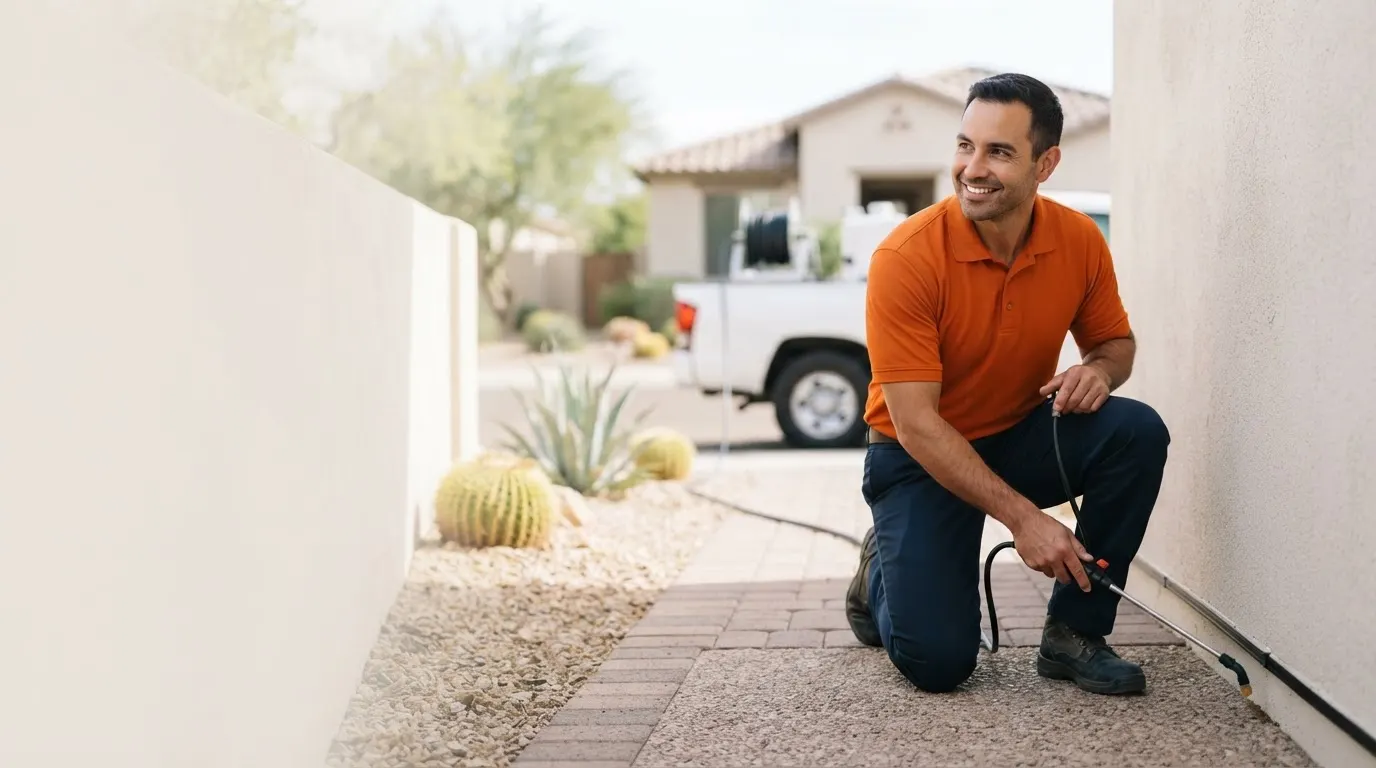
Pest Control Service in Phoenix is a specialized structural defense and chemical extermination service that prevents, manages, and eliminates indigenous Sonoran Desert arthropods and rodents from residential and commercial properties.
Every service reflects the same meticulous attention to detail, whether it's a single job or a larger pest control service project across Phoenix.
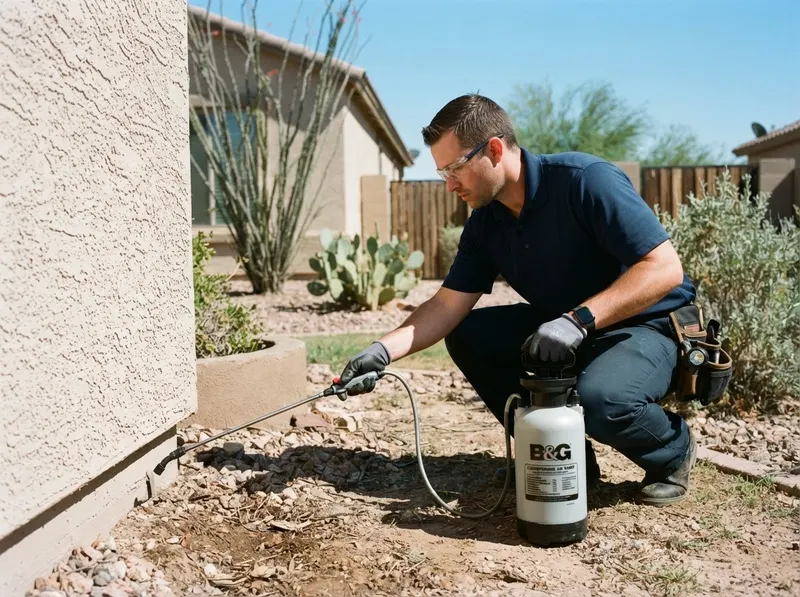
Formulated specifically for Centruroides sculpturatus, this service applies high-durability microencapsulated suspensions to exterior stem walls, block-wall mortar joints, and expansion gaps. Sonoran desert heat normally degrades standard consumer formulas within 72 hours; microencapsulated active crystals remain stable across 115-degree ambient afternoons, adhering to scorpion cuticles as they traverse weep screeds. Technicians identify hidden daytime nesting zones within decorative river rock, landscape flagstone, and foundation expansion joints. Interior residual treatments focus directly behind baseboard conduits and plumbing penetrations to prevent bedroom incursions. Nighttime ultraviolet blacklight inspections confirm baseline population densities before and after application.
Get a quote →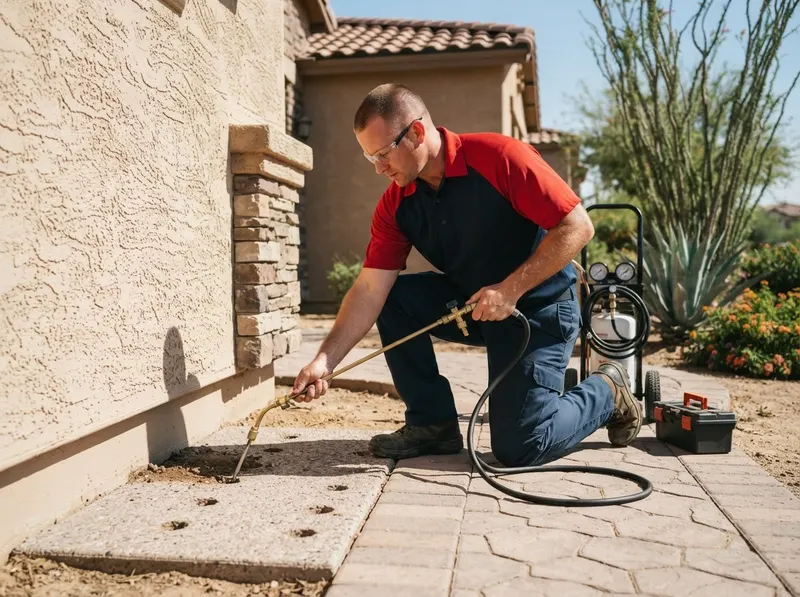
Targeting Heterotermes aureus, the desert subterranean termite native to the Sonoran ecosystem, this structural service builds continuous protective barriers around concrete foundations and stem walls. Work involves precision trenching into native caliche soils alongside external stem walls and drilling through attached patio slabs at 12-inch intervals. Specialized rods inject non-repellent liquid termiticides at four gallons per ten linear feet under controlled pressure. The liquid binds to soil particles, creating an undetectable lethal zone that foraging workers track back into deep subterranean nests beneath the foundation slab. Visual inspections evaluate drywall blistering, mud exploration tubes, and structural wood framing integrity.
Get a quote →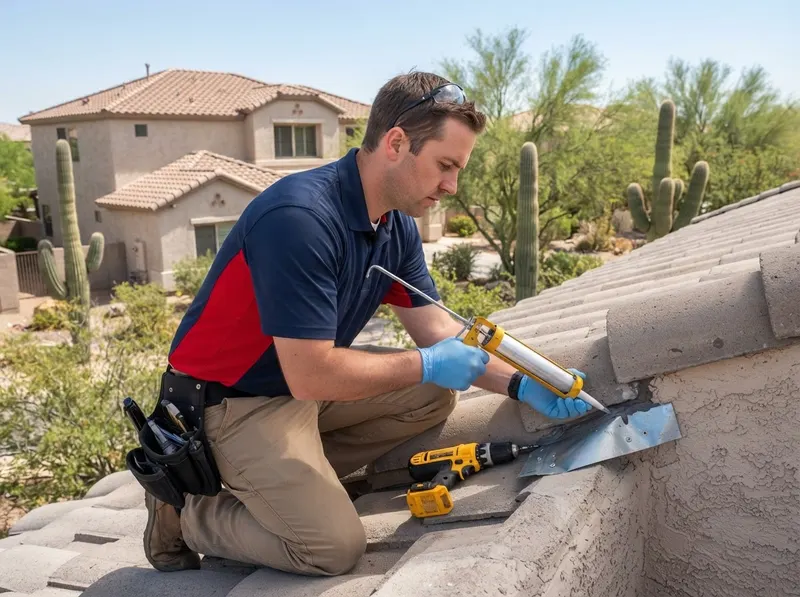
Roof rats (Rattus rattus) exploit Phoenix citrus canopies, irrigation lines, and tile roofs to establish attic harborages. Structural rodent control isolates and terminates active colonies through mechanical trapping inside attic crawlspaces, deliberately avoiding broadcast interior poison baits that create odor issues inside wall cavities. Crews install 16-gauge welded wire mesh across roof ridge vents, plumbing pipe jacks, HVAC chase lines, and exterior decorative architectural cutouts. Sealant barriers applied around conduit penetrations block ingress points larger than one-quarter inch. Sanitization protocols remove pheromone-laden droppings and damaged attic insulation to protect interior air quality.
Get a quote →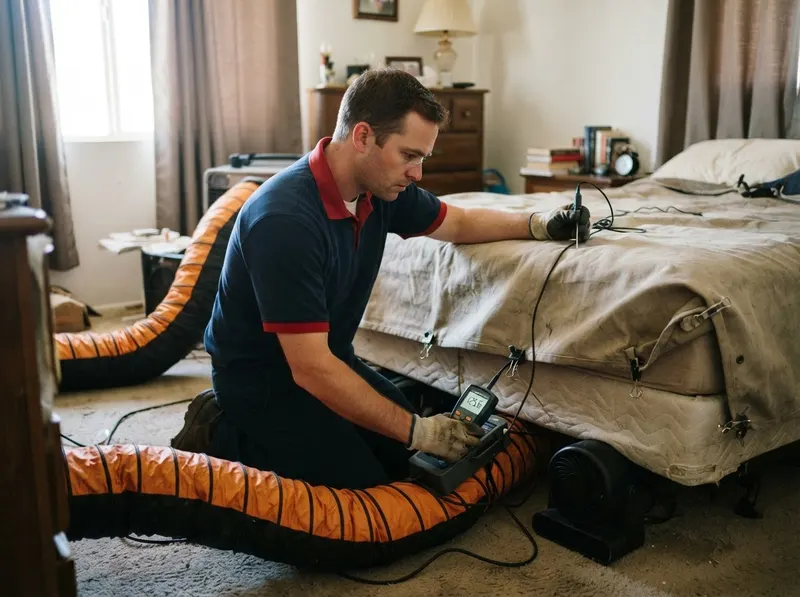
Intense thermal convection heating eradicates Cimex lectularius infestations in residential homes, multifamily apartments, and hospitality suites without residual synthetic chemical odors. High-output electric or indirect diesel heaters elevate indoor ambient temperatures to a sustained 135 to 145 degrees Fahrenheit for a minimum of four continuous hours. Commercial air movers circulate superheated air into wall cavities, mattress seams, box springs, baseboards, and structural cracks where bed bugs harbor. Thermal probes and infrared monitoring confirm that core furniture structures achieve absolute lethal temperatures, destroying all life stages including heat-resistant eggs in a single comprehensive appointment.
Get a quote →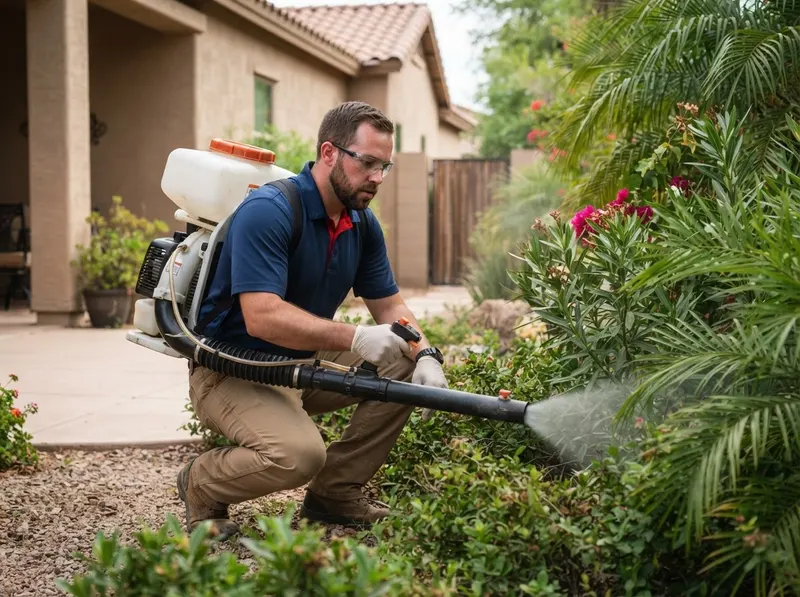
Heavy rainfall from summer monsoon systems saturates low-lying yard drainage zones, creating standing water pockets that trigger rapid Culex mosquito reproduction. Specialized residual misting targets the undersides of broadleaf desert vegetation, dense oleander hedges, covered patio ceilings, and exterior block walls where adult mosquitoes rest during extreme midday heat. Biological larvicide briquettes containing Bacillus thuringiensis israelensis (BTI) are placed directly into standing retention basins, unused fountains, and decorative landscape swales. This interrupts mosquito larval development within 24 hours without impacting desert wildlife, birds, or domestic outdoor pets.
Get a quote →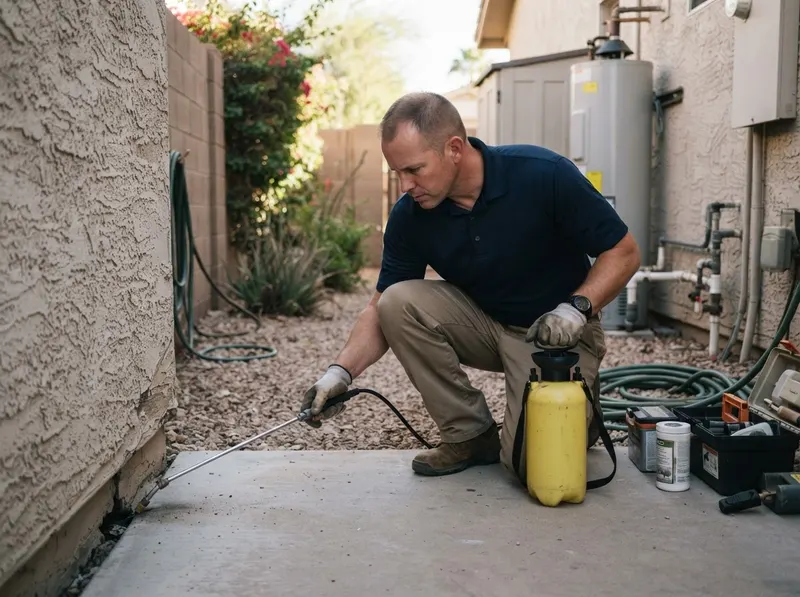
Focusing on Periplaneta americana (American cockroaches) and Blatta orientalis, this service stops large sewer roaches that exit city utility vaults and migrate through landscape plumbing connections during high-humidity summer nights. Technicians apply humidity-resistant water-activated insecticidal granular baits through decorative gravel beds, utility access boxes, and drainage culverts. Interior sink traps, laundry overflow pipes, and floor drains receive specialized foaming microbial cleanouts that break down biological scum holding roach attractants. Exterior perimeter chemical bands around foundation perimeters prevent roaches from migrating under exterior door sweeps and garage weather stripping.
Get a quote →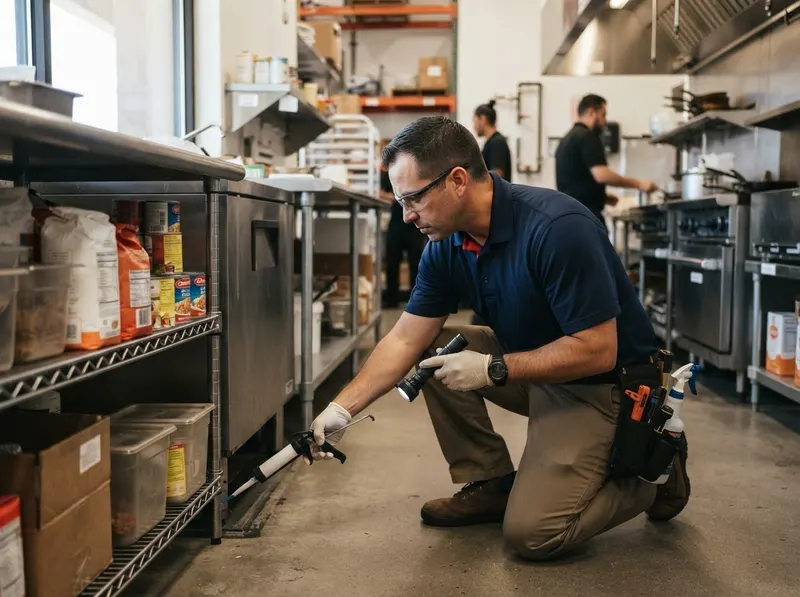
Designed for restaurant facilities, food logistics hubs, and commercial operations, this service implements rigorous integrated pest management under strict state health codes. Service regimens deploy tamper-resistant insect monitoring stations, pheromone traps, and barcoded electronic inspection tracking. Technicians execute crack-and-crevice treatments targeting German cockroaches (Blattella germanica), stored-product beetles, and house flies using non-volatile compounds around industrial cooking equipment and food preparation zones. Detailed digital sanitation reporting outlines non-chemical structural adjustments, such as rubber door sweep replacements and drain maintenance, required to pass county regulatory inspections.
Get a quote →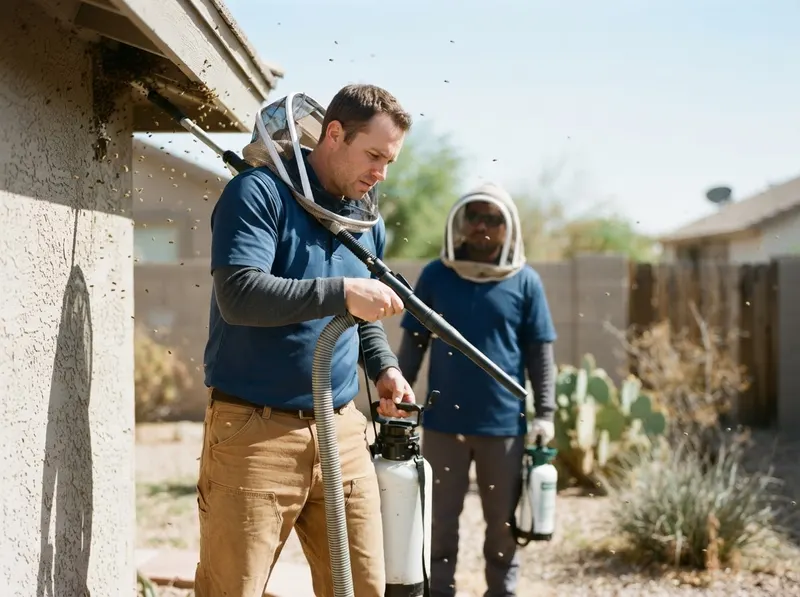
Desert climates accelerate comb building and defensive territorial behavior in feral Africanized honeybees, paper wasps, and yellowjackets. Technicians equipped with protective respiratory gear and full suits eliminate nesting colonies established within irrigation boxes, hollow exterior block fence cavities, roof eaves, and attic gable vents. Fast-acting aerosol knocking agents quickly neutralize defensive swarming risks around property pathways. Following eradication, crews complete physical comb extractions, honey removal, and cavity deodorization to stop secondary scavengers, such as carpet beetles, ants, and wax moths, from causing future structural damage inside exterior walls.
Get a quote →You get a firm, itemized quote for your pest control service before any work begins, no surprises, no pressure.
Careful prep, tidy work, and a full cleanup when we are done. We treat your home and belongings like our own.
The same trusted, background-checked team from the first call to the final check.
Selecting structural management in Maricopa County requires balancing target species behavior against formulation resilience under extreme ultraviolet radiation. If a property experiences nighttime sightings of Arizona bark scorpions along baseboards or interior ceiling vents, choose a microencapsulated pyrethroid perimeter defense paired with physical exclusion sealing; this binds durable active ingredients to stucco and masonry weep screeds, preventing interior room penetration. If structural drywall shows bubbling paint, hollowed trim, or mud tubes ascending stem walls, choose non-repellent liquid termiticide perimeter trenching rather than surface repellents; non-repellents allow worker termites to transfer lethal actives invisibly throughout subterranean colonies without triggering structural avoidance.
If perimeter block walls show American cockroach harborages following summer monsoons, select automated insect growth regulator applications combined with granule bait matrices along landscape gravel lines; the trade-off is that insect growth regulators interrupt reproductive molting cycles over 14 to 21 days rather than providing immediate instant contact knockdowns, yet they permanently collapse deep sewer and wash infestations. When roof rats access attic insulation through Spanish barrel tiles or palm fronds, select multi-point structural exclusion using 16-gauge quarter-inch galvanized hardware cloth coupled with interior mechanical snap traps; avoidance of exterior poison bait stations eliminates secondary toxicity risks to neighborhood pets and native birds of prey, though it requires precise structural ladder work across eves and architectural roof returns.
Every project gets a firm, written price after a free on-site visit. Ranges below for orientation.
Tell us about your pest control service job and we'll send a clear, written quote, usually the same day. Or just call and talk to a real Phoenix pro.
(833) 435-5326
Phoenix properties face distinct ecological pest pressures driven by severe summer heat and seasonal precipitation shifts across the Sonoran Desert. Neighborhoods bordering Camelback Mountain, South Mountain Park and Preserve, and the Phoenix Mountains Preserve experience routine bark scorpion incursions as dry desert washes push arachnids toward irrigated residential lawns. Properties surrounding the Desert Botanical Garden and Papago Park encounter dense subterranean termite activity due to expansive native soil networks, while historic homes in the Willo Historic District require specialized preservation methods to treat aged wood framing without damaging architectural integrity.
Free estimates for Phoenix & the surrounding area.
 Blue Barrel Pest Control