Phoenix monsoon storms deposit sudden precipitation that pools in micro-basins, irrigated turf, and desert hardscapes, triggering rapid mosquito reproduction cycles in temperatures exceeding 100 degrees Fahrenheit. The…
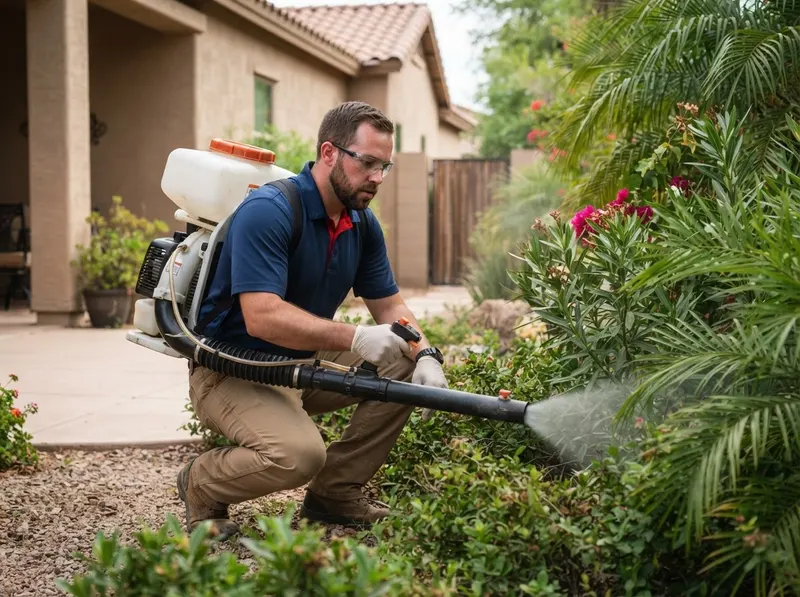
Phoenix monsoon storms deposit sudden precipitation that pools in micro-basins, irrigated turf, and desert hardscapes, triggering rapid mosquito reproduction cycles in temperatures exceeding 100 degrees Fahrenheit. The native environment surrounding South Mountain Park and Preserve, Camelback Mountain, and the Phoenix Mountains Preserve creates natural drainage pathways that collect water in residential yards across Ahwatukee Foothills, Arcadia, and Desert Ridge. Left unmanaged, female Aedes aegypti mosquitoes deposit eggs in container perimeters, potted plant saucers, and subterranean French drains, producing biting adult populations in as few as 7 days. Standard consumer yard sprays often degrade quickly under direct desert UV radiation, leaving backyards vulnerable to pest re-infestation within 48 hours.
Professional intervention deploys dual-action defense mechanisms tailored to extreme heat. Technicians treat non-draining water with Bacillus thuringiensis israelensis (BTI), a targeted biological larvicide that halts mosquito development in larval stages without harming domestic pets or wildlife visiting from Papago Park or the Desert Botanical Garden. For shaded foliage, perimeter block walls, and covered patio structures in neighborhoods such as Encanto Village, Willo Historic District, and Maryvale, specialized microencapsulated formulations bond to stucco and leaf surfaces, maintaining residual barrier integrity through Arizona heat waves.
Deciding between a single corrective knock-down treatment and seasonal barrier maintenance depends on yard topography and nearby water resources. A single corrective fogging addresses an active swarm following a singular storm surge, but does not provide persistent protection against subsequent hatchings after late-season rains. Properties with dense citrus canopies in the Biltmore Area or flood-irrigated lots in North Mountain Village require continuous larvicide replacement and barrier renewal every 21 to 30 days through October to interrupt ongoing generational cycles. The primary operational trade-off centers on application frequency versus sustained protection, where single treatments lower initial investment but leave properties exposed to secondary storm flushes.
Every job gets a firm, written price after a free on-site visit.
Tell us about your monsoon mosquito management job in Phoenix and we'll send a clear, written quote, usually the same day.
 Blue Barrel Pest Control