Bark scorpion control requires specialized protocols because Centruroides sculpturatus possesses a thick, protective cuticular wax layer that allows it to tolerate standard general-pest pyrethroids. In Maricopa County,…
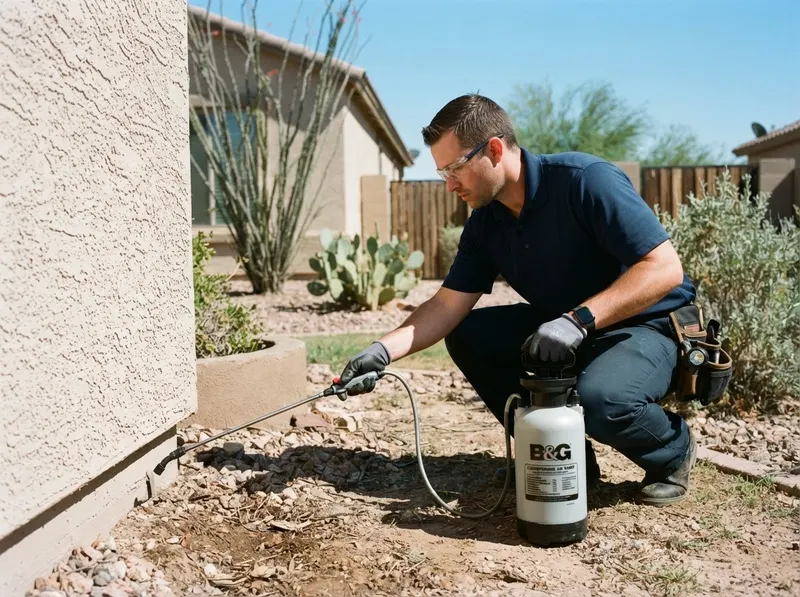
Bark scorpion control requires specialized protocols because Centruroides sculpturatus possesses a thick, protective cuticular wax layer that allows it to tolerate standard general-pest pyrethroids. In Maricopa County, high summer surface temperatures exceeding 140 degrees Fahrenheit on exterior masonry cause consumer-grade chemicals to break down within 72 hours. Specialized microencapsulated formulations suspend the active ingredient within UV-resistant microscopic capsules, maintaining a contact kill zone along stem walls, stucco weep screeds, and block fence expansion joints throughout extended 115-degree heat cycles.
Residential homes bordering natural desert terrain, such as properties near South Mountain Park and Preserve, Camelback Mountain, and the Phoenix Mountains Preserve, experience heightened scorpion migration during the July-to-September monsoon transition. Pressure changes and localized moisture push scorpions from subterranean washes into irrigated yards in Ahwatukee Foothills, Desert Ridge, and Arcadia. While standalone chemical barriers control surface foragers, total management demands sealing structural entry points. Bark scorpions compress their exoskeletons to slip through gaps measuring only 1/16 of an inch, commonly penetrating homes via sliding glass door tracks, plumbing pipe penetrations behind drywall, and uncapped expansion joints in decorative stone veneer.
Selecting the proper treatment tier depends on home construction and adjacent terrain. Properties in older agricultural or flood-irrigated pockets like Willo Historic District, Biltmore Area, and Encanto Village benefit from microencapsulated exterior barriers paired with prey-elimination treatments to strip away woodlice and roach populations. Newer developments in North Mountain Village and Maryvale bordered by raw desert washes require structural exclusion sealing combined with targeted dustings of crawl spaces and attic insulation where scorpions shelter during daytime heat. The trade-off between exterior perimeter spraying and full mechanical exclusion is maintenance frequency versus upfront installation time: exterior sprays require reapplication every 60 days during peak season, whereas silicone-based sealing provides multi-year physical defense but requires a comprehensive physical walk-through of the home foundation.
Every job gets a firm, written price after a free on-site visit.
Tell us about your bark scorpion control job in Phoenix and we'll send a clear, written quote, usually the same day.
 Blue Barrel Pest Control